visas
Document Legalisation for Portugal 2026: Pain Index

Brazil stamps a document in days and Nepal cannot stamp one at all. This index ranks six countries by steps, fees and time.
Last checked: 28 October 2026.
Every Portugal visa file has a quiet stage that nobody warns you about. It is not the interview, and it is not the bank balance. It is the stack of birth certificates, marriage certificates, diplomas and police clearances that must be proved genuine before a Portuguese official will even look at them. That proof is called legalisation. Get it wrong and your file sits untouched while a deadline passes. Get it right and the rest of the process feels almost easy.
The rule itself is simple. Portugal accepts a single certificate, called an apostille, for public documents issued in any country that belongs to the 1961 Hague Apostille Convention. That convention now covers well over 120 countries. If your document comes from a country outside the convention, there is no apostille to get. You follow a longer consular chain instead, with extra counters and extra waiting. Then, in most cases, you still need a certified translation into Portuguese, and the translation should cover the apostille page as well as the document itself.
What makes this painful is not the rule. It is how different the same rule feels depending on where your papers were issued. A Brazilian certificate can be stamped at a local notary office in days. A Nepali certificate cannot be apostilled at all. A British certificate is cheap but slow by post. An American certificate is cheap too, but only if you send it to the right office, and the United States has more than fifty of them. This post ranks that pain, country by country, so you can plan around the worst document in your pile rather than the easiest one.
 Rua Augusta Arch in Lisbon
First, work out which documents actually need legalising
Not every paper in your file needs an apostille. As a general rule, foreign public documents do. That includes birth and marriage certificates, criminal record certificates, diplomas issued by public bodies, and court documents. Private papers, such as a letter from an employer or a personal declaration, usually need a different first step. They are notarised first, so that they become a public act, and only then can they be apostilled.
One more point matters before you spend any money. An apostille proves that a signature and a seal are genuine. It does not prove that the contents of the document are true, and it does not make an old document fresh again. Criminal record certificates are the classic trap here. AIMA states that the foreign criminal record for a Golden Visa application must have been issued within the three months before submission, and Portuguese criminal record certificates themselves are valid for three months from issue. Other routes set their own windows, so check the checklist for your exact route, but the practical lesson is the same everywhere. Order the criminal record last, not first.
The pain index
The table below ranks the countries PortugalSetup readers most often ask about. The score is a judgement based on the number of steps, the government fee, and the realistic waiting time, not just the headline fee. Fees and times change, so treat the figures as planning numbers and confirm the current schedule with the issuing office before you post an original anywhere.
| Country | Route | Government fee | Realistic time | Pain score |
|---|---|---|---|---|
| Brazil | Cartorio apostille | About R$50 to R$200 per document, depending on the state | 1 to 5 business days | 1 out of 5 |
| France and most EU states | Local competent authority, often a court of appeal | Low | A few business days | 1 out of 5 |
| United Kingdom | FCDO Legalisation Office | £45 per document by post, £35 for an e-apostille where eligible | Up to 25 working days by post, plus postage both ways | 3 out of 5 |
| United States | Secretary of State of the issuing state, or the Department of State for federal documents | About $2 to $40 per state document, $20 per federal document | Days to several weeks, depending on the state | 3 out of 5 |
| India | Ministry of External Affairs, after state level attestation | Rs 50 per apostille sticker, plus outsourced service charges | 2 to 15 working days depending on the route | 4 out of 5 |
| Nepal | No apostille available, consular chain only | Varies by counter, plus courier and embassy fees | Weeks, and it depends on embassy appointments | 5 out of 5 |
Brazil and the EU: the easy end
Brazil is the pleasant surprise in this index. Since Brazil joined the Hague Convention in 2016, its notary offices, known as cartorios, issue apostilles directly. You take the original document to a cartorio, pay a state set fee, and in many offices you walk out with the apostille the same day or within a few business days. The fee varies by state, roughly R$50 to R$200 per document in recent guides, and each document needs its own apostille. Because the document is already in Portuguese, you also skip the translation step that adds cost and time for almost everyone else.
The United Kingdom: cheap, but slow by post
British applicants face a different kind of pain. The fee is not the problem. The Foreign, Commonwealth and Development Office charges £45 per document for the standard paper service, and £35 for an e-apostille on eligible documents. The problem is the queue. The standard postal service is currently quoted as usually taking up to 25 working days, excluding postage time.
There are two ways around the wait. Registered businesses can use a next working day service, which is how private providers turn an apostille round in a day, for a higher all in price. And the e-apostille, at £35, is quoted at up to two working days, but it does not cover birth, death, marriage or civil partnership certificates, police certificates, or several other common documents. So the documents most visa applicants actually need are usually the ones stuck on the slow paper route. If you are British, start the paper apostille the moment you know you are applying, and do not let it be the last thing you do.
The United States: fifty offices and one expensive trap
American documents are cheap to apostille and easy to get wrong. Each state sets its own fee, roughly $2 to $40 per document in recent published schedules, with California at $20 and Connecticut at $40 as examples. Federal documents, including FBI background checks, go to the United States Department of State instead, at $20 per document. The trap is sending a state document to a federal office, or a federal document to a state office. Either mistake costs weeks.
The FBI check deserves special attention because so many Portugal applicants need one. It is a federal document, so it goes through the Department of State, and mailed federal requests commonly take several weeks once shipping both ways is counted. Order it early, and keep the tracking for every shipment. If your state offers walk in service, use it for state documents.
India: a tiny fee behind a long chain
India looks cheap on paper and that is exactly why it catches people out. The Ministry of External Affairs charges only Rs 50 per apostille sticker. The catch is everything that happens before the sticker. Most documents need state level attestation first, through a home department, human resources department, or sub divisional magistrate, depending on the document type. Guides put the Delhi route, through a sub divisional magistrate, at two to five working days, and the state education route at seven to fifteen working days. Outsourced collection adds a small service charge, around Rs 84 per document in the ministry schedule, plus a few rupees per page for scanning.
Educational documents are the worst of the Indian pile because every item counts separately. A degree, each mark sheet, and each transcript each need their own apostille. If you are applying with a full academic record, count the documents before you count the cost, and start with the state attestation, not the ministry. The ministry step is the fast part. The chain in front of it is where Indian files lose their month.
Nepal: the hardest pile of all
Nepal sits at the top of this index for a simple reason. Nepal is not a party to the Hague Apostille Convention, so no authority in Nepal can issue an apostille. Anyone selling a Nepal apostille is selling something that does not exist. The correct route is consular attestation, and it has four stages: notarisation, verification by the relevant ministry, attestation by the Ministry of Foreign Affairs in Kathmandu, and finally legalisation by the Portuguese embassy. Notary work in Kathmandu itself is often ready in two to five working days, but the full chain depends on ministry counters and embassy appointments, and it stretches into weeks.
Documents in Nepali also need a certified translation, on top of the attestation chain.
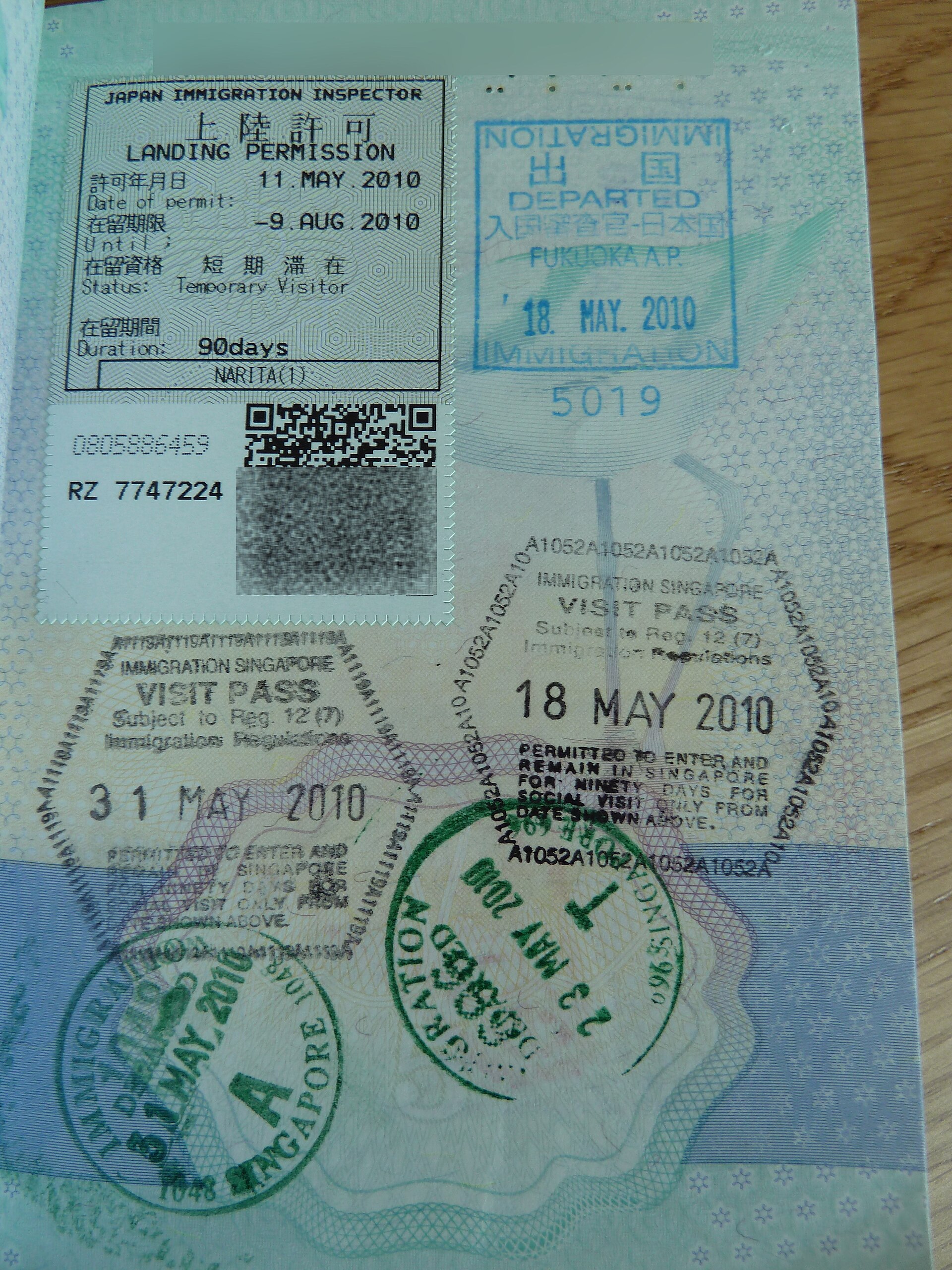 Passport pages covered in entry stamps
The mistakes that waste the most time
Across every country, the same five mistakes cause most delays. The first is apostilling a photocopy when only an original or a certified copy will do. The second is apostilling the wrong version of a document, such as an old format birth certificate that the issuing office has since replaced. The third is ordering the criminal record too early and watching its 90 day window expire while the rest of the file catches up. The fourth is forgetting the translation, or translating the document but not the apostille page attached to it. The fifth is posting originals without tracking, which turns a two week wait into a lost document and a fresh application for a replacement.
Work in this order instead. List every document your route requires, order fresh copies of anything old or damaged, get the apostilles or the consular chain done, then get the certified translation into Portuguese, covering the apostille as well. Our guide to certified translators in Portugal explains what a proper certified translation looks like, and our apostille service comparison is useful if you would rather pay a provider to handle the counters for you.
How to budget for a full file
For a typical single applicant, including a D1 work visa applicant, with three documents, a birth certificate, a criminal record, and a diploma, the government fees alone are small almost everywhere except where a provider is involved. The real budget is time and postage. Allow six weeks for a British paper file, four to eight weeks for an American file with an FBI check, three to six weeks for an Indian file with state attestation, and longer for a Nepali consular chain. Add certified translation on top, priced per page, and add tracked courier both ways for every original you post.
The verdict
Legalisation pain is not about how much a stamp costs. It is about how many counters your document must pass, and whether any of those counters can say no and send you back to the start. Brazil and the EU pass one counter. Britain passes one counter slowly. America passes one counter out of fifty, and picking the wrong one is the risk. India passes a chain that starts at state level. Nepal passes four counters and an embassy. Find the hardest document in your pile, start with that one, and build the rest of your timetable around it. That single decision saves more visa applications than any other piece of paperwork advice we give.
Last checked 28 October 2026. Government fees and processing times change without much notice, so confirm the current schedule with the issuing office before you post an original document.
Get every update by email
Price alerts, rule changes and new guides — one digest, no spam.
Reading about Portugal admin? Get yours handled.
NIF, fiscal rep, bank account — done for you, starting at €79.
Request a free quoteReplies within one business day